
Seeds of a Revolution
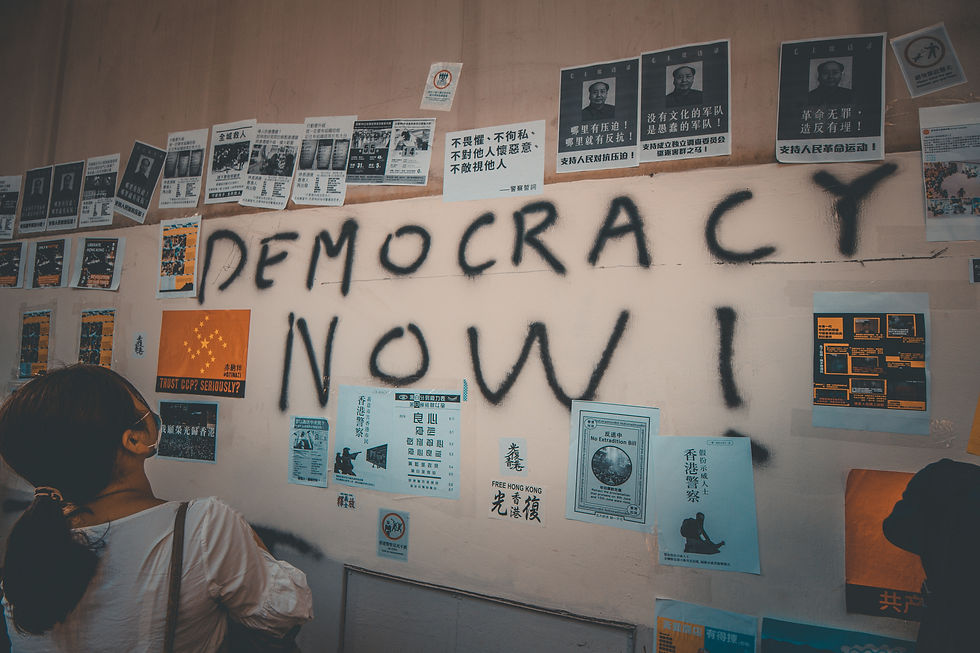
When people talk about democracy failing, they mean it the way you’d talk about a roof failing. Something up above, something structural, something that’s supposed to keep the weather out and doesn’t anymore. Congress gridlocked. Courts politicized. Agencies gutted or captured. The conversation stays up there, at the level of the roof, because that’s where the cameras are.
But nobody waits for the roof to get fixed before they figure out where to put a bucket.
That’s what’s actually happening across this country right now, and it isn’t happening in a hearing room. It’s happening in church basements and kitchens and group chats and community centers with folding chairs, where people who were never going to be rescued by anyone are doing what they have always done: taking care of it themselves. Not because they’re radical. Because they’re the ones who noticed, a long time ago, that help wasn’t always coming, and stopped organizing their lives around the hope that it would.
I’ve spent years now sitting across from people in neighborhoods that get written about but rarely written with, and the thing I keep hearing, in a dozen different versions, is some form of: we already know what’s wrong here, and we already know how to fix it. We just needed somebody to ask.
That sentence is the whole revolution, honestly.
Not a slogan, not a march. A community deciding it no longer needs permission to solve its own problems.
Indigenous nations have been living some version of this for longer than the country has existed. When the Interior Department’s Land Buy-Back Program consolidated and restored nearly three million acres to Tribal trust ownership, it was reported as a policy story, a federal program carrying out the land-consolidation provisions of the Cobell settlement. On the ground, it can also be read as something much older: land returning to Tribal control after generations of federal policies that fractured Native ownership.
And federal policy is only one mechanism. Across the country, Indigenous nations and organizations are also pursuing land return, access and stewardship through land trusts, direct acquisition, conservation partnerships and other legal structures. That is part of what the broader Land Back movement has made visible: sovereignty is not produced by a single court ruling or federal program. It is also built through the accumulation of land, institutions, relationships and authority that make communities harder to displace.
Sovereignty, when you actually watch it get built, often doesn’t look like a dramatic court win. It looks like people quietly making themselves impossible to move again.
In Jackson, Mississippi, the lesson arrived before one of the city’s most visible institutional failures did. Cooperation Jackson was founded in 2014, years before Jackson’s water crisis became a national story, around the idea that communities could build forms of economic power that did not depend entirely on conventional institutions functioning well. Worker-owned enterprises. Cooperative economics. Community-controlled land. Local food production. A solidarity economy built from the ground up.
When Jackson’s water system failed, repeatedly and publicly, the cooperative work was not a reaction invented after the emergency. It was evidence of something that had already been happening: people building community-controlled infrastructure long before the rest of the country had a reason to look.
That’s not simply protest.
That’s a community deciding that resilience cannot begin the day the emergency does.

The same instinct became visible after Hurricane Helene tore through western North Carolina. State, local and federal responders mobilized on a massive scale, with emergency personnel and resources positioned before the storm. But the geography and destruction were so severe that official systems could not immediately reach everyone who needed help.
And in the hollows and small towns, neighbors moved.
They ran chainsaw crews. They cleared roads. Churches, businesses and community spaces became supply hubs. People carried food and water into places vehicles couldn’t reach. They checked on the old person down the road and the family nobody had heard from because they already knew who those people were.
Nobody had to teach them the neighborhood before they responded to the neighborhood.
We’ve built a whole culture around the idea that expertise lives in degrees and titles and official positions, and that people without those things should wait to be told what to do by people who have them. But the woman who’s been feeding her block for fifteen years without being asked, the man who knows every pipe and porch and family history on his street, the grandmother who’s the reason three generations of kids in her neighborhood know how to read- they are not waiting to be credentialed.
They are the actual infrastructure.
They always were.
This is why Peter Block and I built Common Good Journalism, in partnership with Common Good Alliance. We didn’t set out to bring something new into a neighborhood. We set out to go find what was already there and hadn’t been named yet. Because every time someone asks when the future is coming, when things will finally get better, when democracy will start working again, I think they may be looking in the wrong direction.
The future isn’t a place you arrive at on some later date. Pieces of it are already here, unevenly distributed, alive in whichever household or block or aunt or corner store has quietly kept a whole neighborhood functioning while everybody else was busy watching the roof.
That same energy is showing up right here in Cincinnati, in Price Hill, North College Hill and Westwood, and it’s the ecosystem Peter and I hope to expose, not build. The work is with these communities, never for them.
Neither of us wants to be another pair of well-meaning white people arriving to teach anyone how to fix something they already know how to fix. We’re not bringing power to neighborhoods that don’t have it. We’re pointing at power that was already there, that already belonged to the people living the work, and that too often stayed invisible because our institutions - including journalism - were trained to look somewhere else for authority.

That may be the part of this work I care about most.
Journalism has traditionally been very good at covering the collapse.
The water system fails. That’s the story.
The hurricane hits. That’s the story.
The government launches a program. That’s the story.
An election happens. A court rules. An agency acts. A mayor speaks….. the list goes on. We point the camera toward the institution because we have been trained to believe that is where power lives. But what if the more revealing story is the infrastructure underneath it?
Who was feeding people before the cameras arrived?
Who knew which families were struggling?
Who had already figured out how to solve some version of the problem and had simply never been asked?
Those are reporting questions. And the answers tell us something about power that an organizational chart never will.
So when I say the revolution starts at the local level, I don’t mean it starts there and then, eventually, spreads. I mean it has already finished starting in more places than anyone has bothered to count. The question is whether anybody goes looking. That’s the entire bet behind this work.
Not that we can create the future somewhere.
That pieces of it are already being built, right now and our job is to be the ones who finally go look. THAT is where an enormous amount of civic power is moving in this country: not through a single dramatic uprising, but through thousands of small, unglamorous decisions by communities, often communities that institutions have failed longest and most consistently, to stop outsourcing every part of their own survival.
None of that means public institutions no longer matter. Roads and water systems and schools and disaster response cannot be replaced. But institutions are not the only place power lives. And they never were.
Something else has been growing underneath them: networks of knowledge, trust, ownership, memory and mutual obligation that rarely make the national news because they don’t announce themselves as revolutions. They just work.
Right now, in places most of the country has never been taught to look.
So maybe the question isn’t when the future gets here.
Maybe it’s who has been building it while we were looking somewhere else.


Comments